Chemicals Formula

Showing posts with label Purification. Show all posts

Wednesday, March 18, 2009

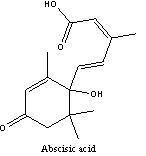
Abscisic acid Purification

Advertisement

C15H20O4
Exact Mass: 264,14
Mol. Wt.: 264,32
m/e: 264.14 (100.0%), 265.14 (17.1%), 266.14 (2.1%)
C, 68,16; H, 7,63; O, 24,21
Boiling Point: 876,01 [K]
Melting Point: 588,05 [K]
Critical Temp: 859,01 [K]
Critical Pres: 23,80 [Bar]
Critical Vol: 800,50 [cm3/mol]
Gibbs Energy: -349,92 [kJ/mol]
Log P: 1,30
MR: 75,64 [cm3/mol]
Henry's Law: 11,92
Heat of Form: -657,71 [kJ/mol]
CLogP: 0.881
CMR: 7.7144

Purified by Crystalized from CC14-pet.ether

Read More......

Chemicals that used in purification: Amines

Advertisement

(a) Picrates:
The most versatile derivative from which the free base can be readily recovered is the picrate. This is very satisfactory for primary and secondary aliphatic amines and aromatic amines and is particularly so for heterocyclic bases. The amine, dissolved in water, alcohol or benzene, is treated with excess of a saturated solution of picric acid in water, alcohol or benzene, respectively, until separation of the picrate is complete. If separation does not occur, the solution is stirred vigorously and warmed for a few minutes, or diluted with a solvent in which the picrate is insoluble. Thus, a solution of the amine and picric acid in ethanol or benzene can be treated with benzene or light petroleum, repectively, to precipitate the picrate. Alternatively, the amine can be dissolved in alcohol and aqueous picric acid added. The picrate is filtered off, washed with water, ethanol or benzene, and recrystallised from boiling water, ethanol, methanol, aqueous ethanol or methanol, chloroform or benzene. The solubility of picric acid in water, ethanol and benzene is 1.4, 6.23 and 5.27% respectively at 20'.

It is not advisable to store large quantities of picrates for long periods, particularly when they are dry due to their potential EXPLOSIVE nature. The free base should be recovered as soon as possible. The picrate is suspended in an excess of 2N aqueous NaOH and warmed a little. Because of the limited solubility of sodium picrate, excess hot water must be added. Alternatively, because of the greater solubility of lithium picrate, aqueous 10% lithium hydroxide solution can be used. The solution is cooled, the amine is extracted with a suitable solvent such as ethyl ether or toluene, washed with 5N NaOH until the alkaline solution remains colourless, then with water, and the extract is dried with anhydrous sodium carbonate. The solvent is distilled off and the amine is fractionally distilled (under reduced pressure if necessary) or recrystallised.

If the amines are required as their hydrochlorides, picrates can often be decomposed by suspending them in much acetone and adding two equivalents of 10N HCl. The hydrochloride of the base is filtered off, leaving the picric acid in the acetone. Dowex No 1 anion-exchange resin in the chloride form is useful for changing solutions of the more
soluble picrates (for example, of adenosine) into solutions of their hydrochlorides, from which sodium hydroxide precipitates the free base .


(b) Salts:
Amines can also be purified via their salts, e.g. hydrochlorides. A solution of the amine in dry toluene, ether, methylene chloride or chloroform is saturated with dry hydrogen chloride (generated by addition of concentrated sulphuric acid to dry sodium chloride, or to concentrated HCI followed by drying the gas through sulphuric acid, or from a hydrogen chloride cylinder) and the insoluble hydrochloride is filtered off and dissolved in water. The solution is made alkaline and the amine is extracted, as above. Hydrochlorides can also be prepared by dissolving the amine in ethanolic HCl and adding ether or light petroleum. Where hydrochlorides are too hygroscopic or too soluble for satisfactory isolation, other salts, e.g. nitrate, sulphate, bisulphate or oxalate, can be used.

(c) Double Salts:
The amine (lmol) is added to a solution of anhydrous zinc chloride (lmol) in concentrated hydrochloric acid (421x11) in ethanol (200m1, or less depending on the solubility of the double salt). Thesolution is stirred for lh and the precipitated salt is filtered off and recrystallised from ethanol. The free base is recovered by adding excess of 5-10N NaOH (to dissolve the zinc hydroxide that separates) and is steam distilled. Mercuric chloride in hot water can be used instead of zinc chloride and the salt is crystallized from 1% hydrochloric acid. Other double salts have been used, e.g. cuprous salts, but are not as convenient as the above salts.

(d) N-Acetyl derivatives:
Purification as their N-acetyl derivatives is satisfactory for primary, and to a limited extent secondary, amines. The base is refluxed with slightly more than one equivalent of acetic anhydride for half to one hour, cooled and poured into ice-cold water. The insoluble derivative is filtered off, dried, and recrystallised from water, ethanol, aqueous ethanol, benzene or benzene-light petroleum. The derivative is then hydrolysed by


refluxing with 70% sulphuric acid for a half to one hour. The solution is cooled, poured onto ice, and made alkaline. The amine is steam distilled or extracted as above. Alkaline hydrolysis is very slow.

(e) N-Tosyl derivatives:
Primary and secondary amines are converted into their tosyl derivatives by
mixing equimolar amounts of amine and toluene-p-sulphonyl chloride in dry pyridine (ca 5-lhols) and allowing to stand at room temperature overnight. The solution is poured into ice-water and the pH adjusted to 2 with HCI. The solid derivative is filtered off, washed with water, dried (vac. desiccator) and recrystallised from an alcohol or aqueous alcohol solution to a sharp melting point. The derivative is decomposed by dissolving in liquid ammonia (fume cupboard) and adding sodium metal (in small pieces with stirring) until the blue colour persists for 10-15min.

Ammonia is allowed to evaporate (fume cupboard), the residue treated with water and the solution checked that the pH is above 10. If the pH is below 10 then the solution has to be basified with 2N NaOH. The mixture is extracted with ether or toluene, the extract is dried (KzCO~), evaporated and the residual amine recrystallised if solid or distilled if liquid.

Read More......

Chemicals that used in purification: Aldehydes and Ketones

Advertisement

The best derivative from which an aldehyde can be recovered readily is its bisulphite
addition compound, the main disadvantage being the lack of a sharp melting point. The aldehyde (sometimes in ethanol) is shaken with a cold saturated solution of sodium bisulphite until no more solid adduct separates. The adduct is filtered off, washed with a little water, then alcohol. A better reagent is freshly prepared saturated aqueous sodium
bisulphite solution to which 75% ethanol is added to near-saturation. (Water may have to be added dropwise to render this solution clear.) With this reagent the aldehyde need not be dissolved separately in alcohol and the adduct is finally washed with alcohol. The aldehyde is recovered by dissolving the adduct in the least volume of water and adding an equivalent quantity of sodium carbonate (not sodium hydroxide) or concentrated hydrochloric acid to react with the bisulphite, followed by steam distillation or solvent extraction.

Other derivatives that can be prepared are the Schiff bases and semicarbazones. Condensation of the aldehyde with an equivalent of primary aromatic amine yields the Schiff base, for example aniline at 100' for 10-30min. Semicarbazones are prepared by dissolving semicarbazide hydrochloride (ca lg) and sodium acetate (ca 1.5g) in water
(8-101111) and adding the aldehyde or ketone (0.5-lg) and stirring. The semicarbazone crystallises out and is recrystallised from ethanol or aqueous ethanol. These are hydrolysed by steam distillation in the presence of oxalic acid or better by exchange with pymvic acid (Hershberg JOC 13 542 1948).

Read More......

Chemicals that used in purification: Alcohols.

Advertisement

Aliphatic or aromatic alcohols are converted to solid esters. p-Nitrobenzoates are the most convenient esters to form because of their sharp melting points, and the ease with which they can be recrystallised and the alcohol recovered. The p-nitrobenzoyl chloride used in the esterification is prepared by refluxing dry p-nitrobenzoic acid with a 3 molar excess of thionyl chloride for 30min on a steam bath (in a fume cupboard). The solution is cooled slightly and the excess thionyl chloride is distilled off under (water-pump) vacuum, keeping the temperature below 40°. Dry toluene is added to the residue in the flask, then distilled off under vacuum, the process being repeated two or three times to ensure complete removal of thionyl chloride, hydrogen chloride and sulphur dioxide. (This freshly prepared p-nitrobenzoyl chloride cannot be stored without decomposition; it should be used directly.) A solution of the acid chloride (Imol) in dry toluene or alcohol-free chloroform (distilled from P205 or by passage through an activated A1203 column) under a reflux condenser is cooled in an ice bath while the alcohol (lmol), with or without a solvent
(preferably miscible with toluene or alcohol-free chloroform), is added dropwise to it. When addition is over and the reaction subsides, the mixture is refluxed for 30min and the solvent is removed under reduced pressure. The solid ester is then recrystallised to constant melting point from toluene, acetone, light petroleum or mixtures of these, but not from alcohols.

Hydrolysis of the ester is achieved by refluxing in aqueous N or 2N NaOH solution until the insoluble ester dissolves. The solution is then cooled, and the alcohol is extracted into a suitable solvent, e.g. ether, toluene or alcohol-free chloroform. The extract is dried (CaS04, MgS04) and distilled, then fractionally distilled if liquid or recrystallised if solid. (The nitro acid can be recovered by acidification of the aqueous layer.) In most cases where the alcohol to be purified is readily freed from ethanol, the hydrolysis of the ester is best achieved with N or 2N ethanolic NaOH or 85% aqueous ethanolic N NaOH. The former is prepared by dissolving the necessary alkali in a minimum volume of water
and diluting with absolute alcohol. The ethanolic solution is refluxed for one to two hours and hydrolysis is complete when an aliquot gives a clear solution on dilution with four or five times its volume of water. The bulk of the ethanol is distilled off and the residue is extracted as above. Alternatively, use can be made of ester formation with benzoic acid,
toluic acid or 3,5-dinitrobenzoic acid, by the above method.

Other derivtives can be prepared by reaction of the alcohol with an acid anhydride. For example, phthalic or 3- nitrophthalic anhydride (1 mol) and the alcohol (lmol) are refluxed for half to one hour in a non-hydroxylic solvent, e.g. toluene or alcohol-free chloroform, and then cooled. The phthalate ester crystallises out, is precipitated by the addition of light petroleum or is isolated by evaporation of the solvent. It is recrystallised from water, 50% aqueous ethanol, toluene or light petroleum. Such an ester has a characteristic melting point and the alcohol can be recovered by acid or alkaline hydrolysis.

Read More......

Monday, March 2, 2009

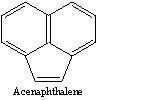
Acenaphthalene Purification

Advertisement


[208-96-81 M 152.2, m 92-93O. Dissolved in warm redistd MeOH, filtered through a sintered glass funnel and cooled to -78O to ppte the material as yellow plates [Dainton, Ivin and Walmsley TFS 56 1784 19601. Alternatively can be sublimed in vucuu.

Read More......

Purification of Abscisic acid

Advertisement

[21293-39-81 M 264.3, m 160-161O (sublimation), [a1287 + 24,000°, [ a 1 2 4 5 -69,OOOO (c 1-50pg/mI in acidified MeOH or EtOH). Crystalized from CC14-pet.ether.

Read More......

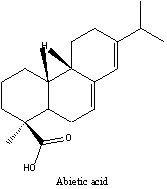
The chemicals Purification Of Abietic acid / Pemurnian Bahan Kimia Asam Abetik

Advertisement


[514-10-3] M 302.5, m 172-175O, -116O (-106O)(c 1, EtOH).
Crystd by dissolving l00g of acid in 95% EtOH (700ml), adding to H20 (600ml) and cooling. Filter, dry in a vacuum (over KOH or CaS04) store in an 02-free atmosphere. h in EtOH nm(1og E): 2343(4.3), 241(4.4), 2505(4.2), 235(4.34) and 240(4.36). [Org Synth 23 1 1952 ; JACS 35 3136 1949; M 116 1345 19851.

Read More......
 

Home | Blogging Tips | Blogspot HTML | Make Money | Payment | PTC Review

Chemicals Formula © Template Design by Herro | Publisher : Templatemu